Stage 1
What to Know Before Visiting a New Construction Builder in Northern Virginia
Stage 1 of the Northern Virginia New-Construction Roadmap
The first builder visit feels informal, but it can shape who represents you, what community you focus on, how quickly you are asked to register, and whether you begin negotiating from a real finished-price budget or an advertised base price.
What you will be ready to decide
- Your representation plan before registration
- Your comfortable finished-price and cash-to-close range
- Which Northern Virginia communities are worth an in-person visit
- The questions and documents needed before any deposit
Use this guide before you scan a QR code, complete a registration card, discuss a specific homesite, or pay a deposit. Builder policies vary, so confirm the rules for the exact community before taking action.
Before you register
Watch this before the builder controls the conversation
If you want independent representation, the timing matters. This video explains why the builder's process can create friction around buyer agents—and why you should settle your representation plan before your first registration, call, form, or tour.

Decide Who Represents You Before Registration
The onsite sales representative is an important source of information, but that representative works for the builder. The distinction matters when the conversation moves from explaining floor plans to discussing price, deposits, contract terms, inspections, incentives, delays, or disputes.
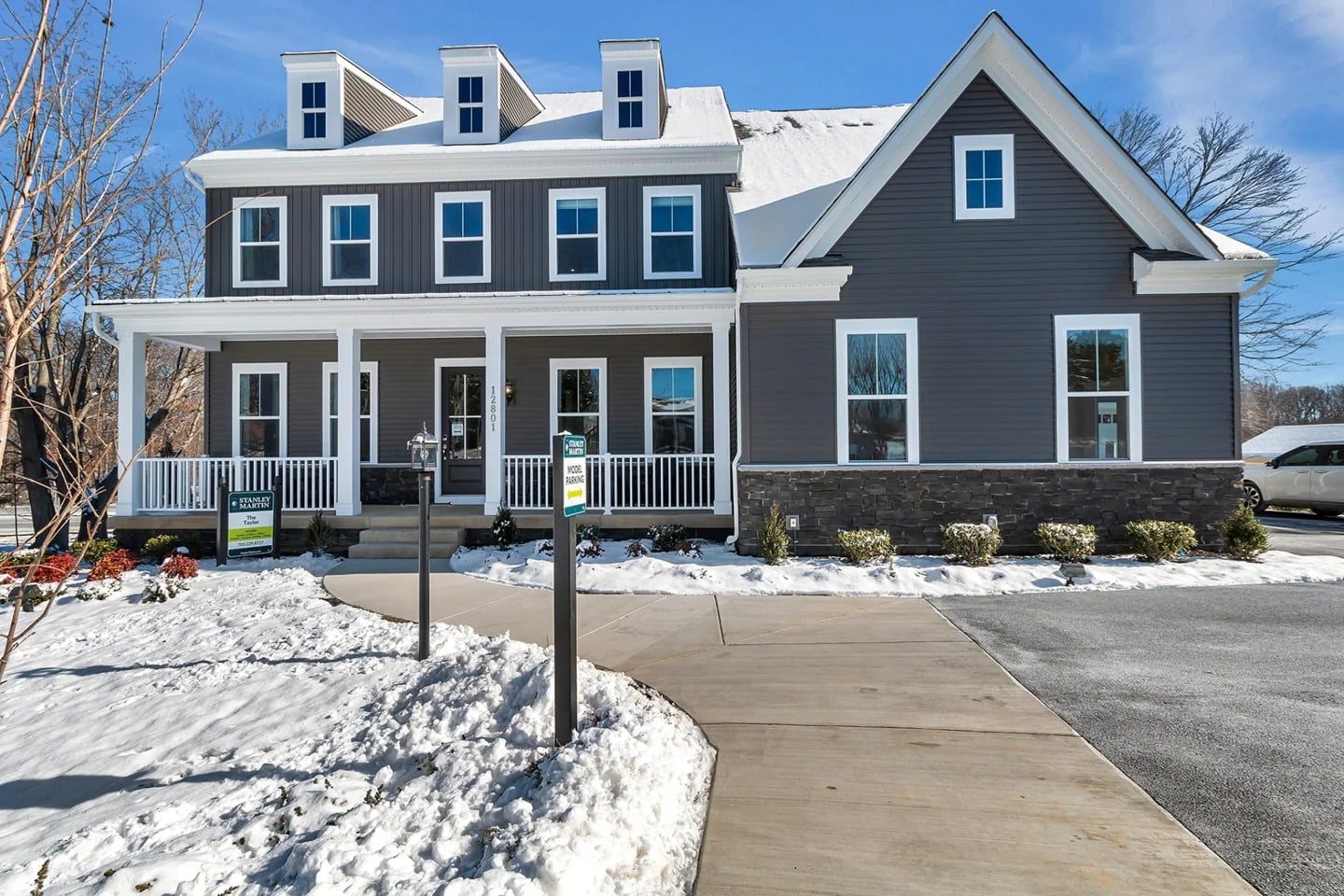
Before you register
Decide whether you want independent representation, confirm the community’s current registration policy, and identify your representative before scanning a QR code or completing a builder form.
Handle representation before registration
Builders can have community-specific registration and agent-participation policies. Before entering a model, calling the sales office, scanning a QR code, or submitting an online form, decide whether you want independent real-estate representation and ask how that person must be identified. Do not assume an agent can simply be added after you have registered yourself.
Questions to ask a prospective buyer representative
- How many new-construction transactions have you handled, and with which Northern Virginia builders?
- Will you attend the first visit, contract appointment, design appointment, pre-drywall meeting, final walkthrough, and closing when appropriate?
- How do you compare the builder incentive with outside financing instead of treating the credit as free money?
- How do you document model upgrades, included features, homesite conditions, and promises made by the sales team?
- When should a real-estate attorney, inspector, lender, surveyor, or other specialist be brought in?
Create a written record from day one
Save the registration confirmation, price sheet, incentive flyer, included-features list, lot-release sheet, community map, floor plan, emails, and every document referenced by the sales team. Ask for important statements in writing. Verbal descriptions of future amenities, views, completion dates, or included finishes should never be your only record.
Build a Northern Virginia Location Shortlist
A beautiful floor plan cannot fix the wrong commute, uncertain school assignment, unusable yard, missing utility service, or future development you did not investigate. In Northern Virginia, location analysis must be done at the parcel and daily-routine level—not just by county or community name.
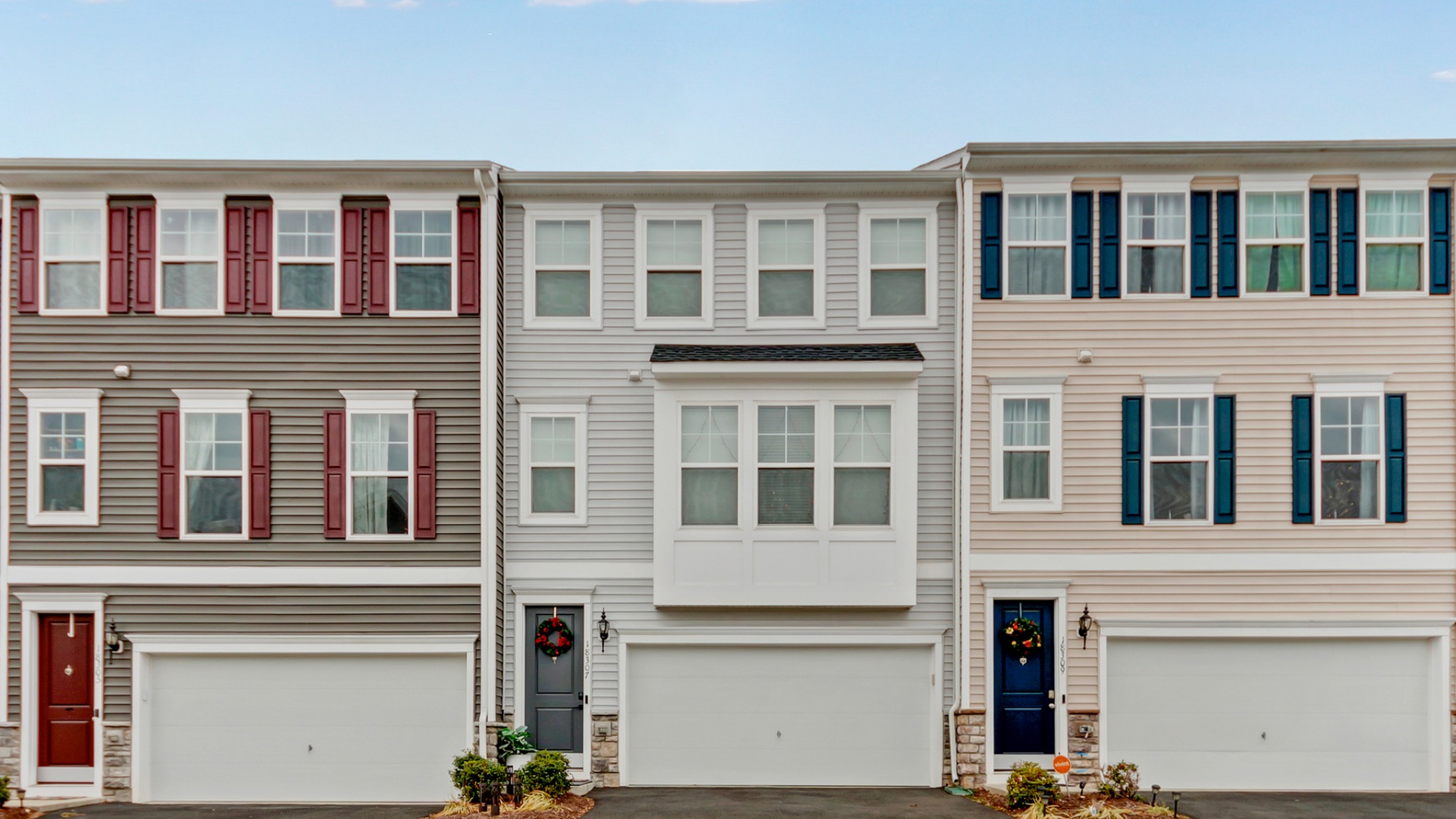
Test the life outside the model home
- Commute: Drive the route at the actual time you would travel in both directions. Test the “last mile” to I-66, Route 28, the Dulles Toll Road, I-95, VRE, Metro, or your remote-work needs.
- Schools: Verify the exact address directly with the school division. Fairfax County Public Schools advises buyers in new developments to contact Facilities Planning; current boundary tools may not reflect future changes.
- Future construction: Review the approved subdivision plat, zoning conditions, future phases, road plans, commercial parcels, stormwater facilities, and land behind the homesite.
- Utilities: Confirm public water and sewer versus well and septic, natural gas availability, electric provider, internet options, trash service, and utility or access easements.
- Community costs: Identify HOA, condominium, master-association, recreation, special-district, parking, and other recurring or startup charges.
Homesite questions buyers often miss
Ask about slope and drainage, retaining walls, stormwater easements, shared driveways, sidewalks, transformer boxes, fire hydrants, mail kiosks, guest parking, road noise, sun orientation, tree-save areas, setback restrictions, and whether a walkout basement or deck shown in marketing is actually possible on that lot.
Official starting points: FCPS school-boundary guidance, county GIS and permit portals, and the recorded or approved development plans for the exact parcel.
Prepare the First-Visit Budget and Questions
The base price answers only one question: what the builder charges for a starting configuration on an unspecified homesite. Your decision requires a finished-price range and a cash-flow plan.
Build the budget in layers
- Home: Base price, elevation, structural options, required plan changes, and design-center selections.
- Homesite: Lot premium, grading or walkout condition, deck or patio needs, landscaping, fencing, blinds, appliances, and anything the builder does not provide.
- Transaction: Deposits, down payment, lender and title charges, prepaid taxes and insurance, HOA or condominium startup charges, moving costs, and reserves.
- Monthly ownership: Principal and interest, mortgage insurance when applicable, taxes after the completed home is assessed, homeowners insurance, HOA/condominium dues, utilities, commuting, and maintenance.
- Timeline risk: Rate-lock extensions, overlapping housing payments, storage, temporary housing, and schedule misalignment.
A preapproval is useful, but it is not a spending target. Give the sales team the range you are comfortable with—not necessarily the maximum a lender says you can borrow.
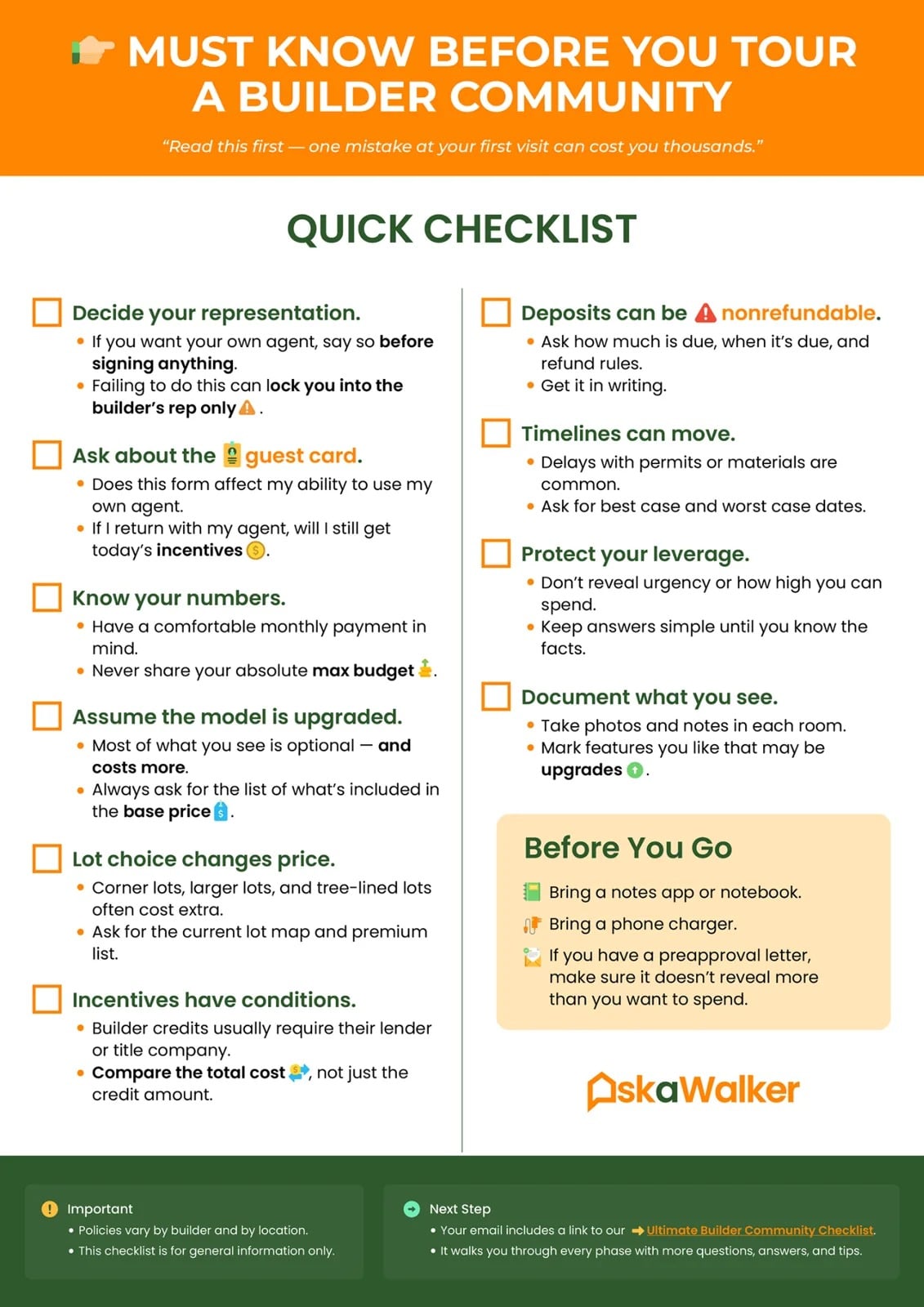
The first-visit question list
Tap each category before or during your builder visit.
Price and deposits
- What is the current base price for this exact plan, and what can change before contract?
- Which elevation, structural choices, or homesite conditions are required?
- What deposits are due at contract and later selection appointments? When can each become nonrefundable?
- Can the price change for material escalation, buyer changes, or other contract provisions?
Model and specifications
- Give me the included-features list for the series and plan—not a general brochure.
- Which visible items are structural options, design upgrades, decorator items, or unavailable?
- May I photograph option labels and take measurements?
Homesite and community
- What is planned beside, behind, and across from the lot?
- Where are easements, stormwater facilities, utilities, retaining walls, mailboxes, guest parking, and future roads?
- Who controls the association now, when does owner control begin, and what amenities are only planned?
Schedule, inspections, and warranty
- Is the completion date a target, a window, or a contractual commitment?
- What events allow the builder to extend it?
- What independent inspection access is allowed, and when must inspectors be scheduled?
- What written warranty applies, what is excluded, and how are claims submitted?
Financing and incentives
- Is the incentive tied to a preferred lender or settlement company?
- Can the credit be used for closing costs, permanent points, a temporary buydown, upgrades, or price reduction?
- What rate, APR, points, fees, lock period, and extension cost are assumed?
The CFPB recommends comparing written Loan Estimates—not just advertised rates or credits. A lender credit can reduce cash due now while increasing the interest rate and long-term cost.
After every visit: Record the finished-price estimate, monthly cost, commute result, top advantages, unresolved questions, deadline, and documents still owed.
Frequently Asked Questions
These are the questions buyers most often realize they should have asked only after registration or deposit.
Should I bring an agent on my first builder visit?
If you want independent representation, address it before the visit. Builder registration policies differ, and some require the agent to accompany you or be identified from the first contact. Ask the community for its current written policy.
Do I need a mortgage preapproval before touring?
Not always for an introductory visit, but a current preapproval or financing conversation helps you compare realistic price and payment ranges. Do not rely on an advertised payment that omits taxes, insurance, dues, mortgage insurance, points, or the completed-home price.
Is the model home’s price the base price?
Usually not. A model may combine structural choices, a premium elevation, design-center selections, landscaping, furniture, window treatments, audio/video equipment, and decorator features that are not included. Ask for a room-by-room option list and the estimated price of the model as displayed.
Can I visit without registering?
You may be able to look around, but the builder can still ask visitors to sign in, scan a code, or complete an online form. Decide on representation first and ask how registration affects agent participation before providing information.
Is a “refundable” deposit automatically safe?
No. Refundability depends on the written contract, the reason for cancellation, deadlines, financing language, and later deposits or change orders. Ask exactly when each payment becomes nonrefundable and what documentation is required to recover it.
Should I choose the community before comparing lenders?
You can explore communities first, but compare the builder’s preferred-lender package with at least one outside written offer before treating an incentive as savings. Match the loan amount, term, lock period, rate structure, points, and timing.
What should make me pause the first visit?
Pause when the finished price is unclear, documents are promised but unavailable, a deadline prevents comparison, the lot surroundings cannot be explained, important terms remain verbal, or you are asked for money before understanding refundability and contract risk.
This guide is educational and is not legal, lending, tax, engineering, or inspection advice. Policies and contract terms vary by builder and community.
Your Next Step
You are ready for Stage 2 when you can explain your representation plan, comfortable all-in budget, target locations, must-have daily-life requirements, and unanswered questions for every community you are considering.
Use the Northern Virginia Property Tour Map to narrow the communities worth visiting. Then compare every model using the same scorecard instead of choosing the home that is staged most effectively.
Want a second set of eyes before you register?
Talk through the community, representation policy, finished-price range, and the questions the builder still needs to answer.
